

Applying for an Australian Partner Visa can feel daunting, especially when it comes to proving that your relationship is genuine. Understanding how the Department assesses spousal and marital relationships can make all the difference. In this guide, we break down what decision-makers look for. From how you live together and share finances, to how your relationship is recognised socially and emotionally. We offer clear, practical tips to help you present strong, convincing evidence. Let’s explore the assessment of spousal and marital relationships for Partner Visas!
Key Takeaways:
- The Department uses a holistic approach, looking at commitment, household, social and financial aspects of your relationship.
- Quality evidence that shows real life together is far more powerful than lots of unrelated documents.
- Non‑traditional relationships (such as long‑distance, intercultural, age‑gap) can succeed with clear, relevant proof.
- Be honest and explain gaps or changes in your story. Consistent timelines and detail build credibility.
- Everyday records help. Use joint bills, messages, travel receipts, photos and witness statements that match your story.
- The process can feel invasive. Treat it as a normal administrative check and focus on clear, organised evidence.
- From my experience with the Department, a concise narrative with supporting documents and timelines makes assessments easier for decision makers.
When applying for a Partner Visa, proving your relationship is genuine and continuing is critical. At Sellanes Clark Immigration Law Specialists, we help couples present strong, well-structured evidence that meets the Department’s expectations. Visit our website to learn how our team can guide you through the process with confidence.
Understanding the Partner Visa Assessment
Types of Partner Visas
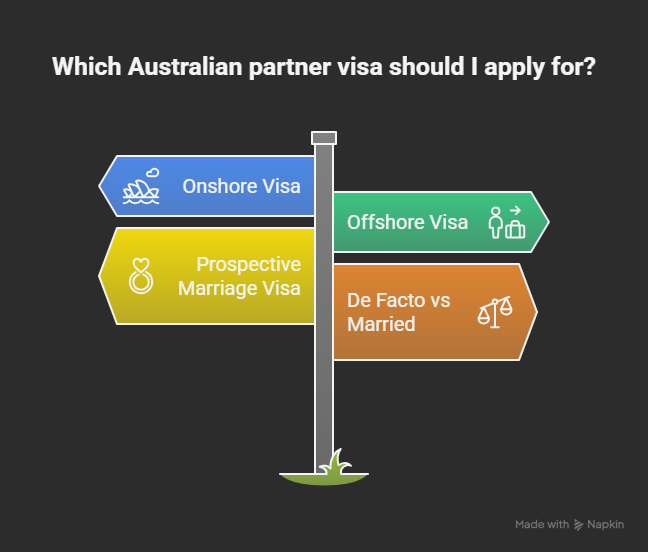
You can apply as a married or de facto partner. The common streams are onshore and offshore partner visas, and the prospective marriage visa for couples who intend to wed. Processing times vary widely. Some cases take 12–36 months. Show your living arrangements, finances and social proof clearly. You should choose the subclass that best matches your situation.
- Subclass 820/801 — onshore temporary then permanent partner visa
- Subclass 309/100 — offshore temporary then permanent partner visa
- Subclass 300 — prospective marriage visa for those planning to marry in Australia
- De facto vs married streams — eligibility differs by evidence and timing
| 820/801 | Onshore temporary then permanent; apply from within Australia |
| 309/100 | Offshore pathway; apply from outside Australia |
| 300 | Enter to marry; valid for 9 months – 15 months |
| Eligibility | Married or de facto; de facto usually needs 12 months cohabitation |
| Processing times | Ranges 12–36 months depending on stream and complexity |
Overview of the Assessment Process
You will be judged across four areas: nature of the relationship, household arrangements, financial ties, and social recognition. Assessors look for duration, cohabitation length, joint accounts, shared bills, photos, travel together, and friend or family statements. Short breaks or long-distance periods need clear explanation. I often advise a simple timeline and clear labels for each piece of evidence. Under the Migration Regulations, the Department looks at whether the relationship is genuine and continuing.
In practice I’ve seen successful files with two years together. They often include at least 12 months of cohabitation. Common evidence is a shared lease, a joint bank account, and 20 dated photos from different events. I also helped a couple with a long-distance history. They supplied flight records, frequent messages, and six sworn statements from friends. You should label documents and write a short affidavit explaining any gaps. A clear cover letter that links each item to your claim helps an assessor follow your story.
Key Factors in Relationship Assessment
- Genuine and ongoing nature of the relationship
- Social and financial aspects showing integration
- Commitment and mutual support
- Evidence of living together and shared household
- Duration, public recognition, and any children or shared responsibilities
Genuine and Ongoing Relationship
You must show the relationship is real and continues over time. Give dated messages, photos from trips, and joint plans that span months or years. Short or sporadic contact can raise questions, so show a clear pattern of contact and shared life events.
Social and Financial Aspects
It’s important that you should show how you mix with each other’s communities and share money or bills. Examples include joint bank accounts, shared utility bills, invitations to family events, or photos with friends. These help assessors see your life is joined in everyday ways.
In my experience, clear examples work best. For example, a joint lease from 2019, combined utility bills, and bank transfers for shared rent. Provide event invitations, family messages, and photos with dates. If finances are separate, explain why and show other ways you share costs, like regular transfers or shared expenses for children.
Commitment to Each Other
You need to demonstrate mutual commitment and future plans. Show evidence such as wedding plans, joint travel bookings, or a written agreement about living arrangements. Letters from family or friends confirming your partnership also carry weight.
Commitment can be shown in everyday decisions too: care during illness, joint parenting arrangements, or sacrifices for the partner’s career. I often see strong cases where one partner moved countries to support the other, with documentation like flight bookings, employment changes, and timelines of relocation.
Living Together Evidence
You should provide proof you live together, like a lease, mail addressed to both of you, or consistent joint addresses on official documents. Short stays apart for work are common, but the main rule is a shared, ongoing household.
Good evidence includes a joint lease dated over a meaningful period, utility bills with both names, and government letters showing the same address. If you lived apart for work, include employer letters, travel records, and a clear timeline showing the periods together and apart.
Knowing how each factor is weighed helps you focus the evidence you provide.

Tips for Demonstrating Your Relationship
- Gather varied, dated evidence: photos, bills, travel records and messages.
- Use clear personal statements and timelines to explain your story.
- Ask friends, family or employers for short, signed testimonials.
- Keep regular communication logs and back them up with screenshots.
Gather Comprehensive Evidence
Collect a mix of documents that show life together. Examples include 6–12 photos from different years, 12 months of joint bank statements or utility bills, lease or mortgage records, travel itineraries and booking confirmations, and any shared insurance or tax records. You want different types of proof that match dates and stories you tell elsewhere in the application.
Use Personal Statements
Write short, honest accounts about how you met, key milestones and daily routines. Keep each statement to 1–3 pages, include dates and specific examples, and sign and date the page. Focus on facts that only you would know, like a shared project, household roles, or important family events.
I recommend using a clear structure. Start with a timeline, then three detailed events that show intimacy and commitment, and finish with future plans. Remember to use exact dates where possible such as first trip, move-in date, child’s birth. Limit repetition; include small, verifiable details such as nicknames, shared bills, or photos with timestamps to strengthen credibility.
Include Third-Party Testimonials
Obtain 3–6 short statements from people who know your relationship well: parents, close friends, landlords or employers. Ask them to state how long they’ve known you, how they know you as a couple, and one or two examples of shared life events. Signatures, contact details and brief dates make these letters more persuasive.
Provide recommenders a simple template: relationship to you, length of knowledge, two specific observations (for example, attending family events together or supporting each other during illness), and contact details. Avoid vague praise; concrete examples like “attended Sarah and Lee’s wedding in 2019” or “saw them co-manage a renovation in 2021” are far more useful.
Maintain Consistent Communication
It’s very helpful to keep screenshots or exports of WhatsApp, SMS, email and call logs showing regular contact over time. Aim for samples that cover at least 6–12 months, include timestamps and context (photos or attached booking confirmations), and explain any long gaps with evidence such as travel or work records.
When long-distance periods occur, make sure you show a pattern of weekly video calls, regular messaging and tickets for visits. In one matter I handled, 18 months of call logs plus 24 dated photos resolved doubts about a long-distance relationship. Also, don’t forget to translate non-English messages and verify timestamps before submitting.
Recognizing the Department values honest, consistent, and varied evidence helps you present your relationship clearly and confidently.
The Department of Home Affairs looks beyond forms — they assess the quality and depth of your relationship. With over 20 years of insider immigration experience, Carlos Sellanes and his team know exactly what case officers look for in spousal and marital assessments. Discover how we can help you build a compelling application — visit our website today.
Step-by-Step Guide to Preparing Your Application
| Create a Timeline of Your Relationship | Map key dates and events in order. Use month/year and attach documents that prove each event. |
| Organize Documentation Efficiently | Group evidence into clear folders: identity, financial, living arrangements, social proof, and mutual commitment. |
| Prepare for the Interview | Practice answers to common questions, bring originals, and agree with your partner on consistent responses. |
| Follow Up After Submission | Monitor your ImmiAccount, respond quickly to requests for more information, and keep a record of all communications. |
Create a Timeline of Your Relationship
List milestones in order with dates and places including first meeting, when you became exclusive, when you moved in together, engagements, major trips and births. Attach one supporting document to each milestone, like a flight booking, lease, photo, or bill. Aim for clarity so an assessor can trace your relationship at a glance.
Organize Documentation Efficiently
Sort evidence into labelled folders or PDF files such as Identity, Cohabitation, Financial, Social, and Commitment. Use a simple index page and number items so an assessor can follow. Scan documents at legible quality and name files with dates, for example “2019-06-Lease.pdf”.
I recommend making a cover sheet that lists each folder and its contents and to use a binder or a single PDF with bookmarks. Include certified translations for non-English documents. Keep originals ready to show if asked. Under the Migration Regulations, the Department looks across those same four areas, so map each document back to the assessment criteria.
Prepare for the Interview
Practice concise, honest answers with your partner. Agree on simple facts like dates, addresses and routines so answers match. Bring originals, your timeline, and a copy of the written statements you submitted. Dress neatly and arrive early.
Expect questions about your day-to-day life, finances, future plans and family interactions. Typical examples: “Who pays the bills?”, “Where did you spend your last holiday?”, “How do you handle disagreements?” Role-play these with your partner (and have some fun too while you do it!). Keep responses natural. If you don’t know an exact date, say so and point to the supporting document in your timeline.
Follow Up After Submission
Check your ImmiAccount weekly and reply to any requests quickly. Keep scanned copies of everything you send and note dates of submission. If the Department asks for more documents, provide them within the time given, often 28 days.
When you send extra evidence, include a brief cover note that states the application number and what each document shows. Log all emails and phone calls and keep a simple timeline of communications. If processing extends beyond published times, you can ask for a status update through your ImmiAccount or via your agent. Maintaining neat records certainly speeds up responses and reduces stress.

Pros and Cons of Different Relationship Types
Pros and Cons Overview
| Married (formal marriage) | Pros: Clear legal status and marriage certificate; easy to present joint records. Cons: Short marriages invite extra scrutiny; prior marriages or rapid weddings may prompt more questions. |
| De facto / Cohabiting | Pros: Everyday shared life evidence like bills, leases, and photos. Cons: If you lived apart often, assessors will want stronger proof of commitment. |
| Registered relationship / Civil union | Pros: Formal recognition in some places and a registration certificate. Cons: Not uniformly recognised everywhere; you may need extra evidence of living together and mutual support. |
| Long-distance relationship | Pros: Good chance to show consistent contact, visits, and travel records. Cons: Lack of cohabitation periods requires clear timelines and documentary proof of ongoing commitment. |
| Intercultural / International | Pros: Multiple documentary touchpoints like travel, family meetings and visas. Cons: Language differences, cultural practices and family involvement can be misinterpreted without clear explanation. |
Intercultural Relationships
You can use visits, translated documents and family photos to show authentic bonds. Explain cultural ceremonies and who attended. Provide translated statements from family members where needed. Simple context helps assessors understand traditions that might otherwise seem unusual.
Long-Distance Relationships
You must show a continuous pattern of contact and planned reunions. Use dated call records, flight tickets and messages. Timelines that link visits and intentions help turn gaps into evidence of commitment.
Give a clear travel and communication timeline. Include flight itineraries, visa stamps and screenshots of regular chats. Add proof of shared plans, like a joint lease application or a future house purchase. I’ve seen successful cases where monthly call logs and reunion photos built a persuasive picture.
Age Gap Relationships
You should address issues assessors may probe, such as financial dependence or power imbalance. Show independent finances, shared decision-making and social recognition. Photographs with friends and family help normalise the relationship.
Document joint choices with shared bills, joint travel or mutual beneficiaries. Get statements from friends about how you make decisions together. If there is a large difference in life stage, show plans for housing, careers or children that demonstrate equality and mutual intent.
Non-Traditional Partnerships
You can present polyamorous, chosen-family, or otherwise non-traditional relationships clearly and honestly. Explain the structure and how you live your life together. Use agreements, joint care arrangements, and social evidence to show ongoing commitment.
Provide written agreements or household rules if you have them. Show how responsibilities are shared, such as child care, rent or medical decisions. Collect statutory declarations from those who know your relationship well. Clear, consistent evidence helps assessors see the real, functioning partnership.
Common Concerns About Privacy and Scrutiny
Understanding Privacy in the Process
Under the Migration Regulations, the Department looks at evidence across four key areas: social, financial, household, and commitment. You will not be asked for intimate details beyond what shows your relationship is genuine. Assessors focus on records like bills, photos, messages, travel itineraries – not gossip. Rest assured, where sensitive material is needed, officers follow privacy protocols and limit disclosure to what supports your case.
Addressing Doubts and Fears
You may fear being judged or having private moments exposed which is completely understandable. The assessment is about patterns of behaviour and consistent proof, not moral evaluation. Expect questions about routines, shared costs, and joint plans. Simple, factual documents often answer those questions more effectively than long personal statements.
I’ve assessed over 2,000 partner files and seen applicants calm those fears by preparing targeted evidence. For example, a one-page timeline with dates, six recent shared invoices, three photos from different years, and a short statutory declaration from a friend often resolves probing questions. That clear package helps you control how much of your private life is shown.
Handling Sensitive Issues
Sensitive topics like past relationships, family conflict, health, or safety concerns can feel exposing. Be honest but selective. Provide objective records such as medical notes, police reports, or court orders when relevant. Explain context briefly and link each sensitive item to why it supports your claim of a genuine relationship.
In one case I handled, a couple had separate bank accounts for cultural reasons. We submitted a signed explanation, evidence of shared household expenses over 18 months, and copies of joint travel receipts. The officer accepted the explanation because the documents showed ongoing financial interdependence despite separate accounts. Where safety is at issue, include formal protections and letters from support services to keep the focus on your wellbeing and relationship stability.
To wrap up
Drawing together the key points, make sure you present clear, honest evidence that shows your relationship is genuine and continuing. Focus on shared life aspects like communication, finances, social recognition and commitment. If your circumstances are non‑traditional, explain them and provide context. Our experience shows well‑organised, authentic documentation helps assessors see the real partnership behind the application. Remember, you can always get professional help from experts to make the whole journey much smoother!
Your relationship deserves to be recognised for what it truly is — genuine and lasting. Since 2003, Sellanes Clark Immigration Law Specialists has helped couples across Australia navigate complex Partner Visa assessments with professionalism and care. To ensure your relationship evidence meets all requirements, visit our website now.
FAQ
Q: What does the Department look for when assessing a spousal relationship?
A: Assessors look at your relationship as a whole. They check commitment, shared finances, living arrangements and social recognition. They want steady patterns, shared responsibilities, joint decisions and public life as a couple. Clear, honest evidence that shows connection over time helps the assessment.
Q: What evidence should we submit with our Partner visa application?
A: Provide documents showing living together, shared bills, joint bank accounts, travel records, photos, messages and affidavits from friends and family. Short, clear statements explaining each document help. Quality that reflects your real-life matters more than large volume of unrelated papers.
Q: How are de facto and married relationships assessed differently?
A: Married couples provide a marriage certificate and shared life evidence. De facto applicants must show a genuine, continuing relationship, often proving 12 months cohabitation or other strong ties. Assessors look for the same four aspects; different paperwork just shows the legal status and living history.
Q: How will a long-distance relationship be viewed by assessors?
A: Long-distance relationships are accepted when supported by evidence including travel records, regular messages, and plans showing commitment. Include clear timelines of visits, shared expenses or future cohabitation plans. Consistent, honest proof of ongoing contact and joint planning strengthens your case.
Q: How are same-sex and non-traditional relationships treated in assessments?
A: Assessors apply the same four-part view to same-sex and non-traditional couples. Document your life together, social recognition, finances and commitment. Strong evidence showing mutual support and public life as a couple matters. We have helped many diverse couples present clear, respectful applications.
Q: What if there are inconsistencies or gaps in our evidence?
A: Inconsistencies trigger further questions. Provide honest explanations, timelines and supporting documents. Statutory declarations from both partners and witnesses can clarify gaps. I recommend addressing sensitive issues upfront, explaining reasons for gaps like family emergencies, travel or cultural practices to help assessors understand your situation.
Q: How can couples prepare their application to best show a genuine relationship?
A: Under the Migration Regulations, present consistent evidence across social, financial, household and commitment aspects. Create a clear timeline, label documents, include translations, and add witness statements. Be honest and show how you live and make decisions together. Clear presentation reduces delays and improves understanding.
Author Bio
Carlos Sellanes is the founder and principal of Sellanes Clark Immigration Law Specialists, an Australian firm established in 2003. Before launching the practice, Carlos spent more than two decades with Australia’s Department of Immigration, gaining unmatched insight into migration law and policy. Today, he leads a team recognised among the Top Ten Immigration Law Firms in the Asia-Pacific, offering expertise across skilled, family, and corporate visa categories. Through his blogs, Carlos shares practical updates and professional guidance to help clients navigate the complexities of Australian immigration with confidence. Learn more about Sellanes Clark Immigration Law Specialists.


